
For decades, presentations have been one of the least measurable parts of business communication. A digital presentation sent by email disappeared into an inbox, and creators had no reliable way to know whether it was opened, read, or simply ignored. Marketing emails had open rates, websites had analytics, but presentations remained a blind spot. Slidyo changes that by bringing detailed engagement tracking to every deck it shares. For teams that rely on presentations to win deals, secure approvals, or communicate strategy, this visibility transforms how they plan, follow up, and improve their content.
The Blind Spot in Traditional Sharing
When presentations are shared as attachments, creators lose sight of them immediately. They cannot tell whether the recipient opened the file, how much of it they reviewed, or which parts caught their attention. This uncertainty leads to guesswork in follow-ups and missed opportunities to address concerns. Teams may spend weeks refining decks without knowing whether anyone actually reads the sections they worked hardest on. The absence of data makes improvement slow and largely based on intuition.
What Slidyo Measures
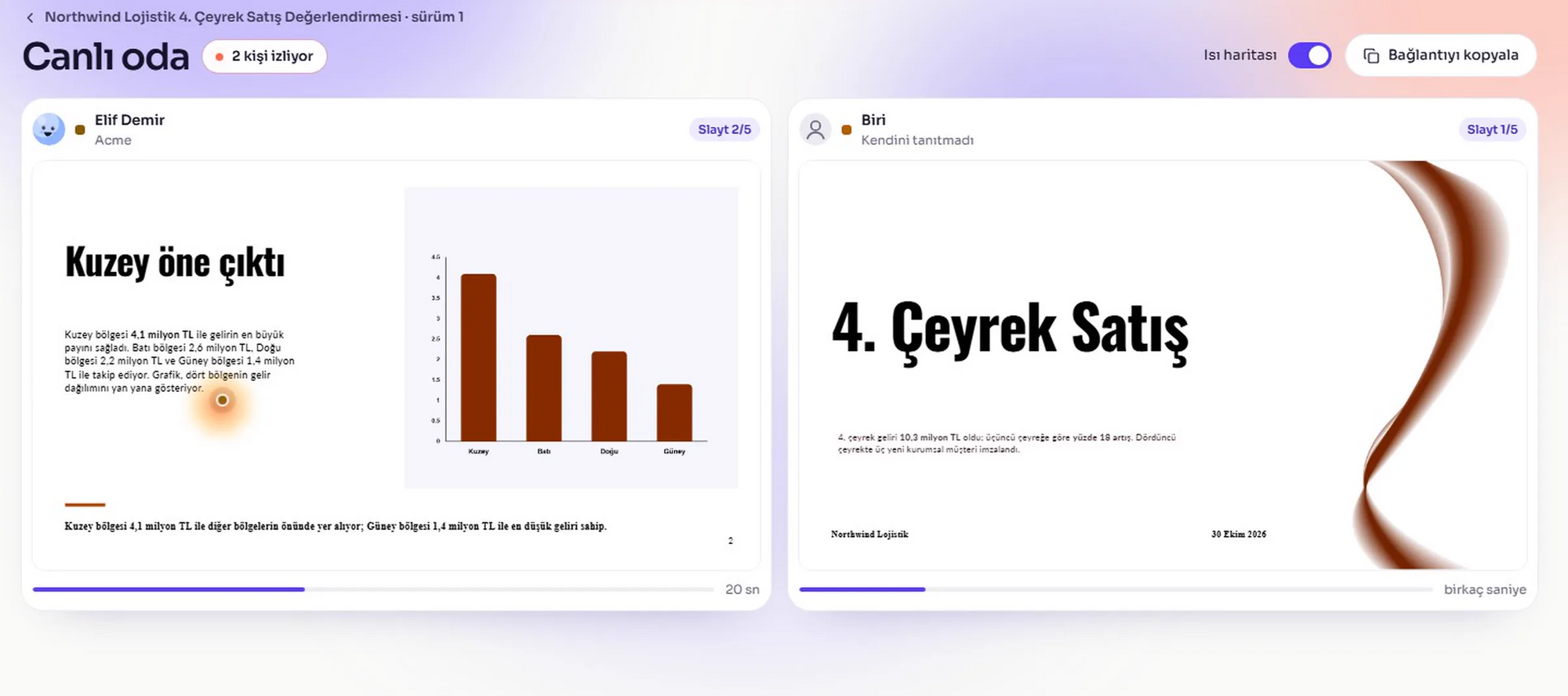
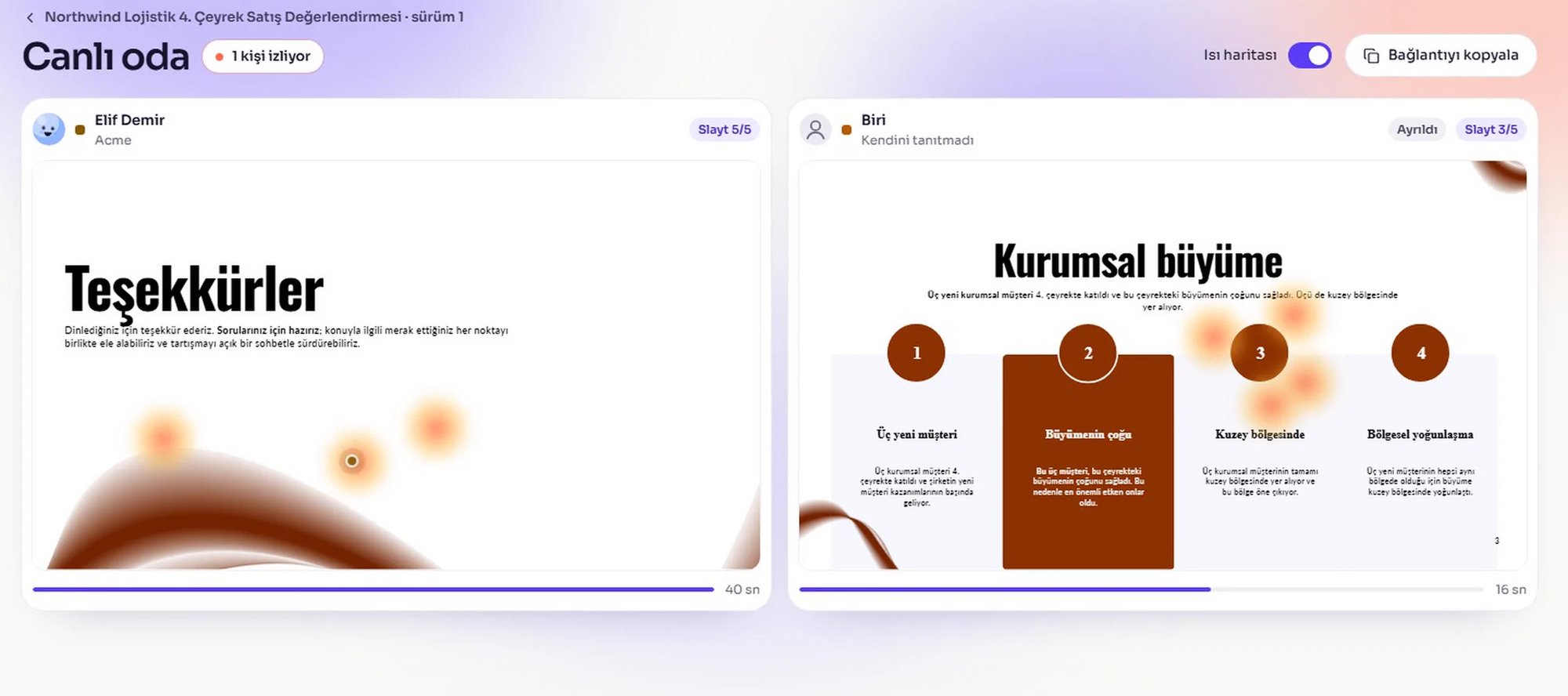
Slidyo's engagement tracking provides a clear view of how viewers interact with each presentation. Creators can see who opened a link when the viewer shares an email, how much time was spent on each slide, where viewers stopped, and which questions they asked. The platform's own examples include insight figures like total time spent and number of views, as well as how far a viewer progressed through a deck. These metrics turn presentations into measurable assets.
Time Per Slide as a Signal of Interest
Time spent on individual slides reveals what viewers care about most. A prospect who lingers on the pricing slide is likely evaluating cost seriously. A stakeholder who spends extra time on implementation details may have concerns about feasibility. Slides that are skipped quickly might be less relevant or poorly designed. By reading these signals, creators can tailor follow-up conversations and adjust content to emphasize what resonates while trimming what does not.
Drop-Off Points That Reveal Problems
Knowing where viewers stop watching is just as valuable as knowing where they linger. If many viewers exit at the same slide, it often indicates a problem, such as confusing information, a weak transition, or a section that feels irrelevant. Slidyo highlights these drop-off points, giving creators a clear target for improvement. Fixing a single problematic slide can significantly increase the number of viewers who reach the conclusion and call to action.
Questions as Direct Audience Feedback
Slidyo allows viewers to pause and ask questions by voice or text, with answers drawn from the slides and added sources. These questions are recorded as part of engagement tracking, providing direct insight into what the audience wants to know. Recurring questions may suggest that information is missing or unclear. Unique questions can reveal specific concerns of individual prospects. This feedback is often more honest and detailed than what creators receive in formal meetings.
Using Data to Time Follow-Ups
Engagement data allows teams to follow up at the right moment. Instead of sending a generic reminder days later, a rep can reach out shortly after a prospect reviews the deck, referencing the sections they spent time on. This approach feels helpful rather than pushy, because it responds to genuine interest. For teams managing many opportunities, prioritizing follow-ups based on engagement ensures that energy goes to the people most likely to move forward.
Measuring Across Teams
When presentations are measurable across an entire team, patterns emerge that individual creators might miss. Slidyo's team workspace allows members to share presentations, themes, and a brand kit, making it easier to compare performance across similar decks. Teams can identify which versions perform best and spread successful approaches. Combined with narrated delivery and secure single-link sharing, this collective learning helps organizations steadily raise the quality of their presentations.
Turning Presentations Into Performance Assets
Measurement changes how teams think about presentations. Instead of one-time documents, they become performance assets that can be tested, refined, and optimized over time. Slidyo makes this possible by combining engagement tracking with AI content creation, narration, interactive questions, and secure sharing. Tems can start creating for free and begin collecting insights from their very first shared deck. With real data guiding decisions, every presentation becomes an opportunity to learn and improve.