
Ask any shoemaker what the single most important object in their workshop is, and the answer will rarely be a machine or a material. It will be the last—the sculpted form around which every customized dance shoes is built. In dance footwear, the last matters even more than in ordinary shoes, because dancers demand fit that supports balance, protects the foot through repeated impact, and disappears from awareness during performance. Suphini's willingness to develop exclusive lasts for custom clients is one of the less visible but most consequential services it offers. Understanding what a last is, why it shapes everything, and how the development process unfolds gives buyers a clearer picture of where true customization begins.
What a Shoe Last Is and Why It Matters
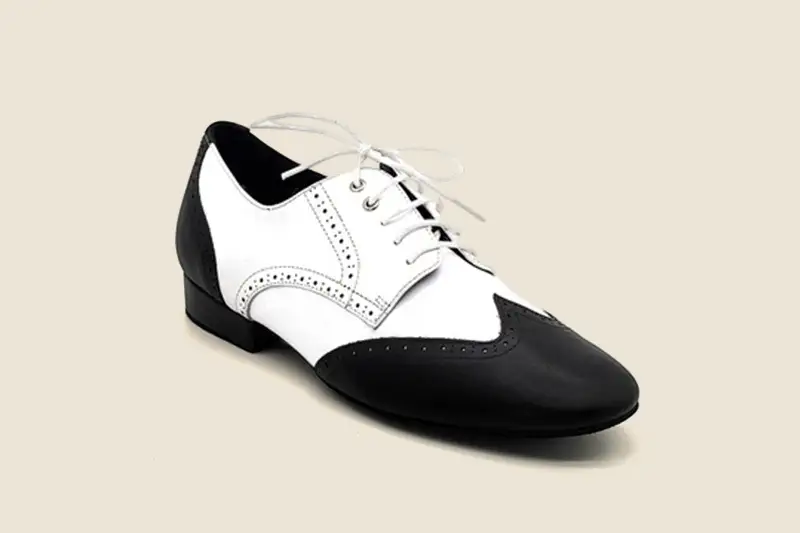
A last is a three-dimensional model of a foot, typically made from wood, plastic, or high-density foam, around which the shoe's upper is shaped and the sole is attached. Its contours determine toe box width, arch support, heel positioning, and overall volume—the invisible architecture of fit. Two shoes can share identical materials and styling yet feel completely different because their lasts differ by millimeters in the right places. For dance shoes, the stakes are especially high: a last that allows the foot to slide forward during spins causes toe pressure, while one that grips too tightly restricts articulation in Latin styles. Mass-produced dance shoes often rely on a limited number of generic lasts to keep costs down, which is precisely why so many dancers complain that nothing quite fits. Exclusive lasts exist to solve that problem.
Why Generic Lasts Fall Short for Dance
The human foot resists standardization, and dancers' feet are shaped by years of specific movement patterns. Ballroom dancers often develop particular callus formations and arch demands; ballet-trained dancers carry different flexibility expectations; social dancers span every age and foot condition imaginable. A factory producing for the general market must compromise, choosing lasts that fit a statistical average reasonably well. That average fits almost nobody perfectly. Generic lasts also struggle across shoe categories—a last suitable for a closed practice shoe will not suit an open Latin sandal, yet cost pressures encourage reuse. Suphini's exclusive last development begins from the recognition that fit is not a luxury feature but the core function of a dance shoe, and that brands serious about quality cannot build their identity on borrowed shapes.
Starting From Foot Data and Movement Needs
Developing an exclusive last begins with information gathering rather than carving. Suphini collects measurements and foot scans where available, but equally important is understanding how the target wearer moves. A last intended for competitive ballroom differs from one designed for social dance or teaching, because the foot behaves differently under each condition. Clients contribute insights from their own customers—common fit complaints, sizing feedback, return patterns—which the technical team translates into dimensional targets. Sometimes existing shoes are dissected to understand what works and what fails in their construction. This investigative phase ensures the last is designed around real feet and real dancing rather than abstract proportions, and it frequently surfaces assumptions that need challenging before any physical work begins.
Sculpting, Testing, and Refining the Prototype
The first physical version of a last is a starting hypothesis, not a finished product. Suphini's team produces prototype lasts, builds fitting shoes around them, and subjects both to structured evaluation. Fit trials with actual dancers or knowledgeable testers reveal pressure points, slippage, and articulation restrictions that measurements alone cannot predict. Feedback is translated into adjustments—widening the toe box slightly, repositioning the heel seat, altering the arch curve—and the cycle repeats. Each iteration moves closer to the intended fit profile. This refinement demands patience and honest communication from clients, but it is where the real value accumulates. A last refined through several rounds of testing carries knowledge that cannot be bought off a shelf, and that knowledge becomes embedded in every pair produced from it afterward.
Sizing Gradations and Consistency Across the Range
A single well-fitting last is only the beginning; a usable size range requires careful gradation. Suphini develops sizing increments so that a size thirty-eight fits as thoughtfully as a size forty-two, avoiding the common failure where a factory scales a model mechanically and creates distortion at the extremes. Grading decisions account for how foot proportions actually change across sizes—width, girth, and heel dimensions do not increase uniformly, and treating them as if they do produces the familiar complaint that larger sizes feel cramped. Once the gradation is finalized, the last set becomes a permanent asset for the client, documented and retained so future orders reproduce the same fit without starting over.
Protecting the Client's Competitive Advantage
Exclusive lasts are, by definition, exclusive. Suphini treats client-specific last development as confidential work, ensuring that the resulting fit profile is not reused for other customers or competing brands. For a footwear brand, this protection is strategically vital: fit is one of the few features a competitor cannot easily copy, and a signature last becomes part of a brand's identity over time. Clients who invest in exclusive last development essentially own a piece of intellectual property embedded in physical form. Suphini's documentation practices support this—records, specifications, and molds are maintained for the client's exclusive use across reorders and future seasons, making the initial investment pay dividends long after the first production run.
A Long-Term Investment in Fit
Exclusive last development requires upfront cost and patience, which can feel daunting to smaller brands. But the calculus changes over time: every reorder benefits from the refined fit, every positive review about comfort traces back to the last, and every season of consistent sizing builds customer loyalty. Suphini's approach to last development reflects a broader philosophy—that customization means more than choosing colors and logos, and that the invisible foundations of a shoe deserve as much attention as its visible surfaces. Brands willing to invest in this foundation discover that fit, ultimately, is what dancers remember.