
Managing a youth volleyball team in Italy is rewarding but demanding. Coaches work with players at different stages of development, deal with changing rosters, communicate with parents and try to keep practices fun while teaching fundamentals. Many youth coaches are volunteers or young trainers balancing coaching with study or work. An app can help by keeping the organizational side under control. In this article we look at how to manage a youth volleyball team in Italy with an app, covering rosters, attendance, lineups, training and simple stats that support young players' development.
Setting Up a Flexible Roster
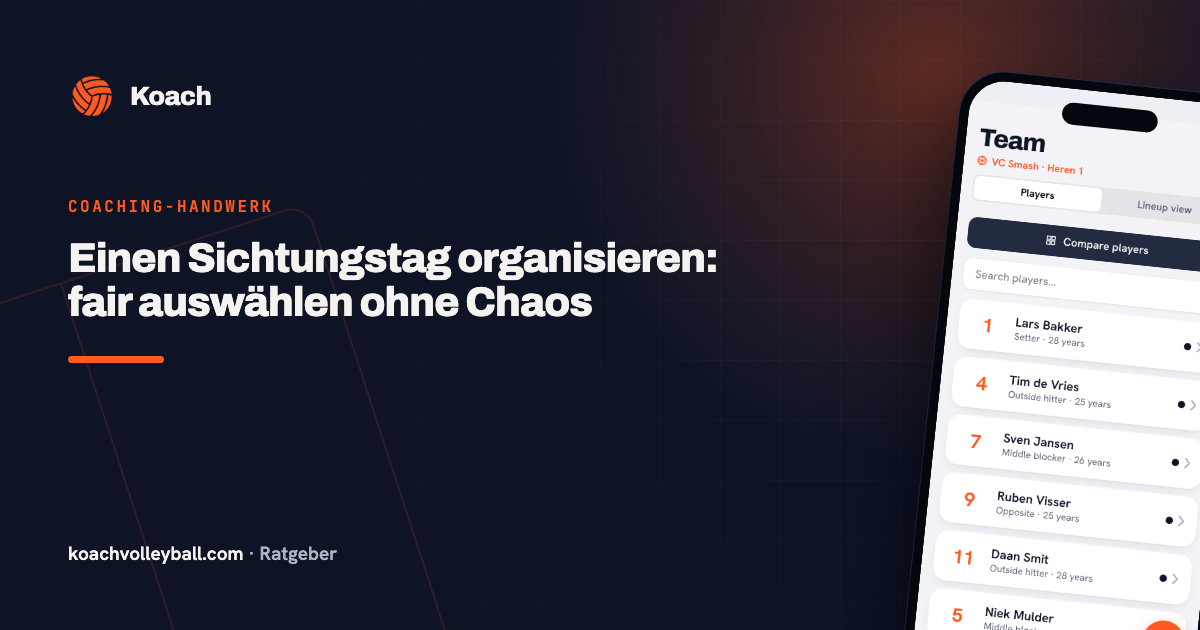
Youth rosters change often. Players join mid-season, move up categories or change positions as they grow and gain confidence. Start by entering each player with their name, jersey number and, where known, their position. Don't worry if positions aren't settled yet; with young players, experimentation is part of development. Update the roster as things change, and let the app carry those updates through to lineups and attendance. A flexible, accurate roster makes every other part of team management easier and prevents confusion on match days when parents and players need clear information. It's also useful to note who can be contacted about each player, since youth coaches often need to reach parents quickly about schedule changes.
Tracking Attendance Fairly
Attendance matters a great deal in youth sport, both for fairness and for spotting problems early. Record attendance at each training session, which takes only seconds in an app. Over time, you'll build a clear record that supports fair decisions about playing time. If a player's attendance drops, a quick conversation with the player or their parents can reveal problems with school, transport or motivation. Having accurate records also helps when parents ask questions about selection, because you can explain decisions calmly and back them up with facts rather than memory alone. Some coaches also send a short monthly update to parents, which reduces questions and helps families feel involved in the team's progress.
Planning Simple, Clear Lineups
Young players need simple, clear lineups. Many youth teams start with a 4-2 or a simplified system before moving to a 5-1. Build lineups on a visual court and step through each rotation to make sure less experienced players are supported by stronger passers. Save several lineups so you can rotate players and share playing time fairly across matches. Showing lineups visually at practice helps young players understand where they need to be, which reduces rotation mistakes and builds confidence. Clear structure lets young players relax and focus on playing the ball. Give young players the chance to try different positions over the season too, since many discover a role they enjoy that nobody expected.
Planning Engaging Practices
Youth practices need structure, variety and fun. Plan sessions with a warm-up, a skill focus, small-sided games and a short team activity. Save plans so you can reuse successful sessions and adjust them as players improve. Keep drills short and give players plenty of ball contacts. For youth coaches in Italy looking for a simple way to keep practice plans, attendance and lineups in one place, questa app makes it easy to prepare sessions quickly and share them with assistants or parent helpers who sometimes lead part of the practice.
Using Simple Stats to Encourage Progress
Simple stats can help young players see their progress. Track serve success and passing quality, and share improvements individually with each player. Focus on personal growth rather than comparisons between players, and celebrate team achievements together. Avoid highlighting poor numbers publicly, because young players respond much better to encouragement. Over the season, these stats also help you plan training, showing which skills need more attention. Managed thoughtfully, a youth volleyball team becomes a place where young players learn, improve and develop a lifelong love of the sport.