
Stadium lighting contracts are among the largest lighting investments a venue will make. Once fixtures are installed high on poles or roof structures, changing suppliers or correcting mistakes becomes difficult and expensive. That is why asking the right questions before signing matters so much. The answers reveal whether a supplier truly understands sports lighting, can deliver on time, and will support the venue for years. This guide lists the key questions venue owners and project managers should ask any stadium lighting supplier before committing.
How to Find a Reliable LED Stadium Light Manufacturer in 2026?
Finding a dependable stadium lighting partner in 2026 means looking beyond price and brightness. Buyers need to assess technical knowledge, production capacity, compliance, project experience, and long-term support. The simplest way to do this is to prepare a clear set of questions and compare how each supplier answers. Strong suppliers give specific, documented responses, while weaker ones rely on general promises. The questions below cover the areas that matter most when choosing a supplier for professional or community sports venues.
Can You Provide a Lighting Simulation for Our Venue?
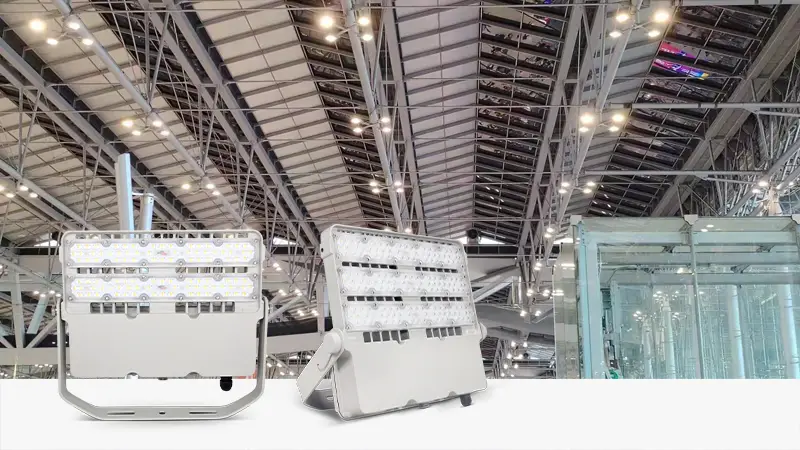
A professional supplier should be able to prepare a photometric simulation based on your field dimensions, pole positions, mounting heights, and the sports played. This shows expected lux levels, uniformity, and glare before any fixtures are ordered. If a supplier cannot provide this, it may lack the engineering ability needed for stadium projects. Ask whether the simulation follows the standards of your sports governing body, and request a copy of the results so you can compare designs fairly across different suppliers.
Which Standards and Certifications Do Your Products Meet?
Stadium lighting must comply with electrical safety rules and often with the requirements of sports federations or broadcasters. Ask which certifications the products hold and request copies of certificates and test reports. A supplier like KML, an experienced led lighting manufacturer that lists CE, ETL, and CCC among the standards it supports, should be able to provide this documentation without delay. Also ask whether the system can meet broadcast requirements, including flicker-free performance and color rendering, if your venue hosts or plans to host televised events.
How Do You Control Glare and Flicker?
Glare can distract players and reduce comfort for spectators, while flicker can ruin slow-motion broadcast footage. Ask suppliers to explain the optical design of their fixtures, including lens types, shields, and beam control. Request information about the drivers used and whether they are flicker-free for high-speed cameras. Good suppliers will explain these features clearly and back them up with test results. Vague answers on these points are a warning sign, especially for venues where player performance and broadcast quality matter.
What Is Your Production Capacity and Delivery Time?
Large stadium projects need many high-power fixtures delivered on schedule. Ask about factory size, monthly output, and typical lead times for samples and bulk orders. Also ask how the supplier handles urgent orders and peak seasons. KML, for example, operates a 12,000 square meter production base, can deliver samples in about seven days and bulk orders in roughly 30 days, and reports an on-time delivery rate of around 99 percent. Clear, realistic answers help venues plan installation around their event calendars.
How Do You Test Products Before Shipping?
Since stadium fixtures are expensive to access once installed, quality control is critical. Ask what tests are performed on materials, during production, and on finished products. Look for waterproof and dust tests, thermal testing, electrical safety checks, and burn-in or aging tests. KML inspects products at the incoming, in-process, and finished stages and runs burn-in tests of eight hours or more. A supplier that can describe its testing in detail is far more likely to deliver fixtures that perform reliably season after season.
Can You Share References from Similar Projects?
Experience with comparable venues is one of the best indicators of reliability. Ask for case studies, project photos, and contact details for previous clients with similar field sizes or event types. Speaking directly with past customers can reveal how the supplier handled challenges, delays, or after-sales issues. Long-term partnerships and repeat orders are strong positive signs. A confident supplier will be happy to share examples of its work and connect you with references who can speak to its performance.
What Warranty and After-Sales Support Do You Offer?
Stadium lights work in tough outdoor conditions, so strong after-sales support is essential. Ask about warranty length, what it covers, how claims are handled, and how quickly replacement parts can be supplied. Also ask how technical support is provided and how fast the supplier typically responds. KML provides 24-hour after-sales service covering fault analysis and replacement lamps. Clear service terms protect the venue’s investment and minimize downtime if issues arise during the season.
Will the System Support Future Upgrades?
Venues change over time. Seating may expand, new sports may be added, or broadcasters may require higher standards. Ask whether the lighting system supports smart controls, remote monitoring, and future expansion without full replacement. Modular designs and compatible product ranges make upgrades much easier. KML’s stadium range, including the FLH, QC06, QC2203, and FLHA, covers a variety of venue sizes and mounting heights. Choosing a supplier with a broad, consistent range helps keep the venue ready for future needs.