
Waste and emissions are two of the most persistent headaches in detergent manufacturing. Raw materials that escape as dust, energy that disappears as wasted heat, and powder that fails to meet specifications all represent money flowing out of the business while also placing strain on the environment. Reducing these losses has become a priority for manufacturers facing rising costs and tightening regulations alike. MeiBao's advanced detergent powder production line addresses both concerns simultaneously, demonstrating that financial efficiency and environmental responsibility are not competing goals but complementary ones.
Precision Dosing Eliminates Material Loss at the Source
Waste prevention begins before any processing occurs, during the measurement of raw ingredients. Traditional dosing methods often overshoot slightly because operators lack confidence in their accuracy, and those small excesses accumulate into significant losses over thousands of batches. MeiBao's production lines use calibrated feeders and load cells that measure ingredients with remarkable precision, delivering only the quantities required by the recipe. This accuracy means manufacturers purchase fewer raw materials to achieve the same output, directly reducing costs while conserving resources. Over a year of continuous production, the savings from precise dosing can be substantial, and the environmental benefit of consuming fewer raw materials compounds the financial advantage.
Containing Dust Through Enclosed Systems
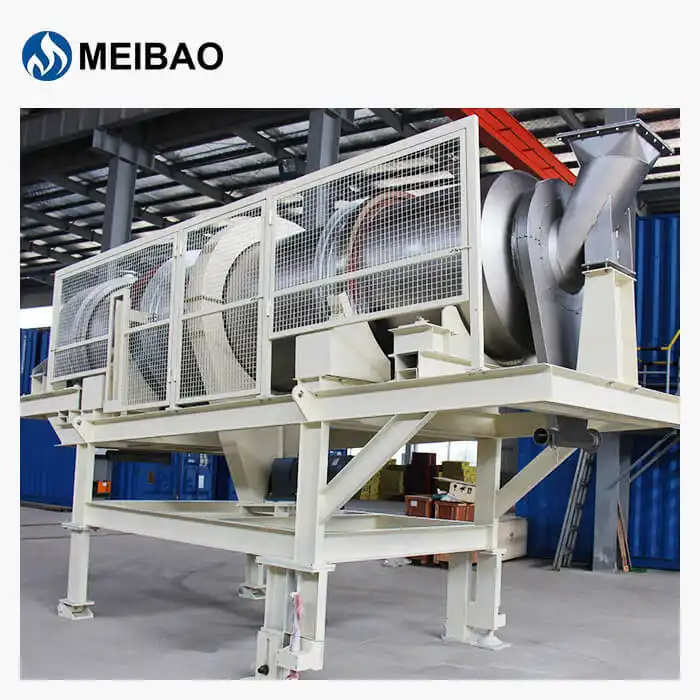
Detergent powder generates dust at nearly every stage of handling, from mixing to conveying to packaging. Uncontrolled dust represents both a product loss and an environmental concern, since airborne particles can escape into the surrounding area. MeiBao addresses this challenge by enclosing conveying systems, sealing processing equipment, and installing effective dust collection mechanisms at critical points. Bag filters and cyclone separators capture airborne powder before it reaches the atmosphere, and captured material is typically returned to the production stream rather than discarded. This closed-loop approach keeps valuable product inside the process while protecting air quality and worker health, addressing multiple concerns with a single integrated strategy.
Recycling Off-Spec Material Back Into Production
Not every particle that emerges from the production line meets specifications on the first attempt. Oversized granules and fine dust captured during screening would traditionally be discarded as waste, but MeiBao's lines incorporate recycling pathways that return these materials to earlier stages. Oversized particles can be ground down and reintroduced, while fines often return to the agglomeration process where they serve as seeds for new granule formation. This internal recycling dramatically reduces the volume of material that leaves the plant as waste. Manufacturers benefit from higher yields per unit of raw material, and the environmental burden associated with waste disposal shrinks accordingly.
Recovering Heat to Reduce Fuel Consumption
Drying represents the most energy-intensive stage of detergent production, and much of the heat generated would traditionally escape through exhaust stacks. MeiBao's advanced production lines incorporate heat recovery systems that capture thermal energy from exhaust air and redirect it to preheat incoming materials or combustion air. This recovered heat reduces the fuel required to achieve target drying temperatures, lowering both operating costs and greenhouse gas emissions. The environmental benefit is straightforward, but the financial benefit deserves equal emphasis. Manufacturers who recover waste heat often see their energy bills decline significantly, improving margins while reducing their carbon footprint.
Optimizing Combustion and Air Treatment Systems
For production lines that rely on combustion for heating, the efficiency and cleanliness of that combustion matter enormously. MeiBao specifies burner systems that achieve thorough fuel combustion, minimizing the release of unburned hydrocarbons and other pollutants. Exhaust gases pass through treatment systems designed to capture remaining particulates and harmful compounds before release. These measures help manufacturers comply with air quality regulations that continue to tighten in many jurisdictions. Rather than waiting for regulators to mandate improvements, manufacturers who choose MeiBao equipment install these capabilities from the start, avoiding future retrofit costs and demonstrating responsible stewardship.
Managing Water and Effluent Responsibly
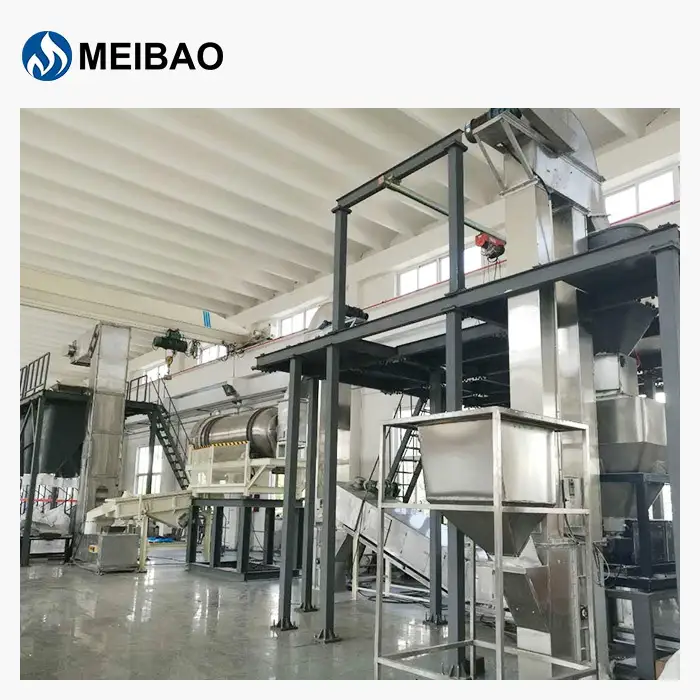
Although detergent powder production is primarily a dry process, water still plays a role in cleaning operations, cooling systems, and certain formulation steps. MeiBao designs production lines that minimize water consumption through recirculation and precise controls, and that manage any effluent streams carefully to prevent contamination. Wastewater is directed to appropriate treatment systems, and manufacturers receive guidance on meeting discharge standards. This attention to water management reflects a comprehensive approach to environmental responsibility that extends beyond the obvious concerns of dust and energy.
Building a Cleaner, More Profitable Operation
Reducing waste and emissions delivers benefits that extend far beyond regulatory compliance. Manufacturers who operate cleaner, more efficient production lines enjoy lower operating costs, stronger community relationships, and improved standing with customers who increasingly consider environmental factors in their purchasing decisions. MeiBao's advanced production lines make these benefits accessible by building waste reduction and emissions control into the equipment itself rather than treating them as separate concerns. For manufacturers seeking to thrive in a world where environmental performance matters more every year, this integrated approach offers a practical path toward both sustainability and profitability.