
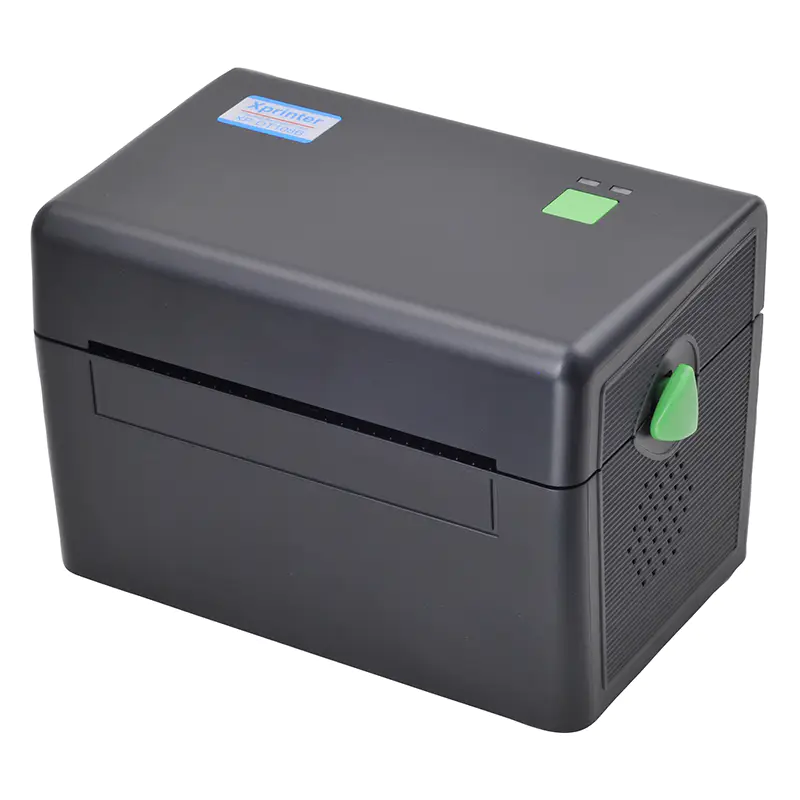
Walk into almost any packing room or dispatch area and you will likely spot a direct thermal printer quietly churning out shipping labels. It has become the default choice for parcel labeling across e-commerce, logistics, and small business shipping, and Xprinter's direct thermal models are among the most commonly used. The reasons are practical rather than glamorous. Shipping labels have a short life, a simple purpose, and a high daily volume, and direct thermal technology happens to fit those conditions almost perfectly. Understanding why helps buyers see when this technology is the right fit and when it is not.
The Fundamental Simplicity of Direct Thermal Printing
Direct thermal printing creates images by applying heat to specially coated label stock. There is no ribbon, no ink, no toner, and no cartridge of any kind. The print head touches the paper, the coating darkens, and the label emerges ready to apply. This simplicity is the core of its appeal for shipping work. Fewer components mean fewer things to replace, clean, or troubleshoot. Staff loading a new roll do not have to thread a ribbon or check tension. For a task performed hundreds of times a day, that reduction in complexity translates directly into fewer interruptions and less training burden on new employees.
No Ribbons Means Lower Consumable Costs
Shipping labels are the definition of a disposable product. They are scanned a handful of times and discarded with the packaging, which makes spending money on premium materials difficult to justify. Direct thermal printing eliminates ribbon costs entirely, leaving label stock as the only consumable. Xprinter direct thermal printers therefore deliver an exceptionally low cost per label, which matters at volume. A business shipping two thousand parcels a month saves considerably compared to thermal transfer or inkjet alternatives, and those savings accumulate month after month without requiring any change in how the operation runs.
Speed and Instant Output for Busy Dispatch Desks
Dispatch areas work against cut-off times, and every minute between an order being packed and a label being applied counts. Direct thermal printers begin printing the moment a job arrives, with no warm-up cycle and no drying time. Xprinter models produce labels rapidly, and higher-end units generate multiple labels per second, allowing packing benches to clear large batches without waiting. This instant response suits the bursty rhythm of shipping work, where quiet periods are interrupted by sudden rushes. When the courier arrives, the labels are already on the boxes.
Durability That Matches the Life of a Shipping Label
The main weakness of direct thermal printing is fading, which sounds like a serious problem until you consider how long a shipping label needs to last. Typically that is a few days, sometimes a couple of weeks for international parcels. Direct thermal label printer handle that timeframe comfortably. Problems only arise when labels are exposed to prolonged sunlight, extreme heat, or heavy friction, conditions a parcel rarely faces before delivery. For labels heading straight into the mail stream, the durability trade-off costs nothing in practice, while the savings and simplicity deliver real benefits every day.
Compatibility with Carrier and Platform Requirements
Shipping labels follow strict specifications set by carriers, and direct thermal printers meet them without difficulty. Standard four-by-six-inch labels print cleanly with sharp barcodes that automated sorting equipment reads reliably. Xprinter direct thermal models handle this format as standard, and they integrate smoothly with major shipping platforms, e-commerce backends, and carrier software through USB, Ethernet, Bluetooth, and Wi-Fi connections. Because direct thermal is so widely used for shipping, media is readily available from many suppliers at competitive prices, which keeps operations running without dependence on a single source.

Easy Maintenance and Minimal Downtime
A printer that stops working during a dispatch rush causes immediate problems. Direct thermal printers have very few parts that can fail, and maintenance is limited largely to periodic print head cleaning and occasional roller inspection. There are no ribbons to jam, no ink to dry out, and no toner to spill. Xprinter builds these machines for straightforward daily use, with easy media loading and simple controls. The result is equipment that keeps working without much attention, which is exactly what a busy shipping operation needs from a tool it relies on constantly.
When Direct Thermal Is the Right Choice
Direct thermal printing suits shipping and delivery labels because the application matches the technology's strengths and avoids its weaknesses. Labels are needed fast, used briefly, and discarded, so ribbon costs and long-term durability are irrelevant. Xprinter's direct thermal printers deliver speed, low operating costs, and reliable barcode quality in a package that requires minimal maintenance. Businesses printing labels that must survive years of exposure or harsh conditions should look toward thermal transfer instead. For everyone else shipping parcels day in and day out, direct thermal remains the practical, proven choice.