
You scrub the black spots off your bathroom ceiling. You spray bleach. You wipe it dry. And within a few weeks, maybe sooner, the spots are back. You have probably assumed that you are simply not cleaning well enough. Or maybe that your home is just too damp. But the real reason mold keeps coming back has almost nothing to do with your cleaning technique. It has everything to do with ecology. Every time you kill mold, you leave behind an empty surface. And nature abhors a vacuum. Within hours, new mold spores floating in the air land on that empty space. If conditions are even slightly damp, they germinate. You have not solved the problem. You have just reset the clock. The only way to stop this cycle permanently is not to keep killing mold, but to make sure something else occupies that space first. That something else is beneficial probiotics.
The Survival Superpower of Mold Spores
To understand why mold is so relentless, you need to appreciate just how good it is at surviving and spreading. A single mold colony can release millions of spores into the air every hour. Those spores are designed for one purpose, to find a surface, attach, and grow. They can survive extreme heat, cold, and drought for years, waiting for the right conditions. Your home’s air always contains mold spores, no matter how clean you keep it. You cannot stop them from landing on your surfaces. The only question is whether they will germinate when they land. They need three things to germinate. Moisture, a food source, and an empty surface to attach to. Traditional cleaning addresses moisture and food, but it leaves the surface empty. You have removed the existing colony but created a perfect landing pad for the next spore that floats by.
Why Bleach and Vinegar Fail Long Term
Bleach is the most common mold killer, and it is also one of the worst choices for porous surfaces. Bleach is mostly water. When you spray it on drywall, wood, or grout, the chlorine evaporates quickly, leaving the water behind. That water soaks into the material, making it even more damp than before. You have killed the surface mold but created ideal germination conditions for the next spore. Vinegar works better on porous surfaces because its acid penetrates deeper, but it still leaves behind an ecological vacuum. Hydrogen peroxide and commercial fungicides have the same limitation. They kill, but they do not occupy. Within days, new mold spores land on the freshly cleaned surface, find residual moisture and organic food, and start growing. You are stuck in a loop of cleaning and regrowth because you are only addressing one part of the mold life cycle. You are forgetting about the empty space.
The Ecological Concept of Competitive Exclusion
Ecologists have a term for what is happening on your bathroom ceiling. It is called competitive exclusion. When a space is occupied by one organism, it is much harder for another organism to move in. The existing resident uses up the food, takes up the physical space, and may even produce chemicals that inhibit newcomers. This is why a healthy lawn resists weeds. The grass is already there, using the sunlight, water, and soil nutrients. The weed seeds cannot find an opening. The same principle applies to mold on your surfaces. If something else is already living there, mold spores cannot establish a colony. The surface is not empty. There is no vacancy. The existing resident does not have to kill the mold. It just has to be there first and refuse to leave. This is the probiotic reason mold finally stops coming back.
How Probiotics Become Permanent Residents
Probiotic Bacillus spores are the perfect tenants for your surfaces. When you spray them onto a clean surface, they settle in and, when conditions are even slightly damp, they germinate and begin growing. They form a microscopic biofilm of their own, not the harmful kind that mold produces, but a protective layer that anchors them to the surface. They consume the same organic nutrients that mold would eat. They secrete enzymes that break down the molecules mold uses to attach. They take up physical space so mold spores cannot find a landing spot. And unlike chemical treatments that degrade within hours, probiotics are alive. They reproduce when conditions favor growth. They go dormant when conditions are dry and reactivate when moisture returns. They do not leave. They are not a treatment you apply. They are an ecosystem you establish.
The Timeline of Permanent Mold Prevention
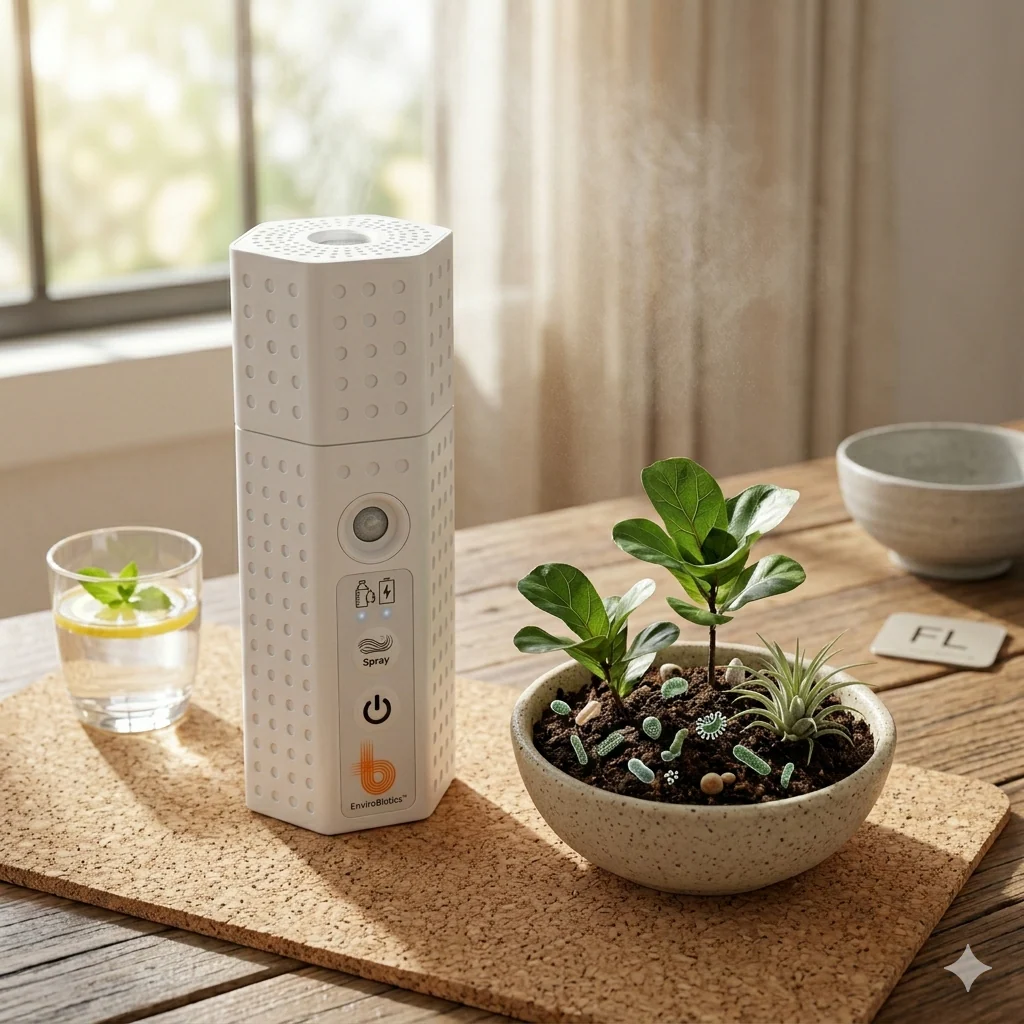
Switching from chemical mold killing to probiotic prevention follows a predictable timeline. In the first week, you clean any visible mold using soap and water or a mild vinegar solution. You then apply a probiotic spray or turn on a probiotic air purifier. The beneficial spores begin settling onto surfaces. In week two, the spores germinate and start multiplying. You might see no visible change. In week three, the probiotic colony becomes established. It begins consuming the organic dust and biofilm that previously fed mold. In week four, the surface ecology shifts. Mold spores still land, but they find no food, no attachment points, and no empty space. They cannot germinate. In month two and beyond, you stop seeing new mold growth. The bathroom corner that used to require scrubbing every two weeks stays clean. The musty basement smell fades. You are not killing mold repeatedly. You are preventing it from ever getting started.
What to Do When You Already Have an Active Mold Problem
Probiotic prevention works best when you are starting with a reasonably clean surface. If you already have an active, visible mold problem, you cannot simply spray probiotics on top of it. The mold colony will ignore the probiotics and keep growing. You must first remove the existing mold. Use soap and water, scrub thoroughly, and dry the area completely. For porous materials like drywall or wood that are heavily infested, you may need to cut out and replace the affected section. Once the surface is clean and dry, then you introduce probiotics. They will occupy the space and prevent the mold from returning. This two-step process, removal followed by probiotic establishment, is the only method that reliably stops the clean-regrow-clean-regrow cycle. It works because you are not just killing. You are replacing. You are not just cleaning. You are cultivating.
Why Some Surfaces Need Ongoing Probiotic Maintenance
Once a probiotic colony is established, it is remarkably persistent. But it is not indestructible. Harsh chemical cleaners, including bleach, hydrogen peroxide, and quaternary ammonium compounds, will kill your beneficial Bacillus colonies just as effectively as they kill mold. If you use these products on a probiotic-treated surface, you reset the surface to empty. The mold spores will then have their chance. This is why switching to mild, non-disinfecting cleaners like plain soap and water is essential for long-term mold prevention. If you must use a disinfectant for a specific reason, such as after handling raw meat or when someone in your home is sick, plan to reapply probiotics afterward. A quick spray of probiotic solution will re-establish the colony within a few days. Think of it as reseeding your lawn after a drought. The infrastructure is still there, but the plants need a little help coming back.